

I Spent ₦50 Million Building Tastyhouse — Then I Shut It Down A Founder’s Story of Courage, Rebuilding & Never Giving Up
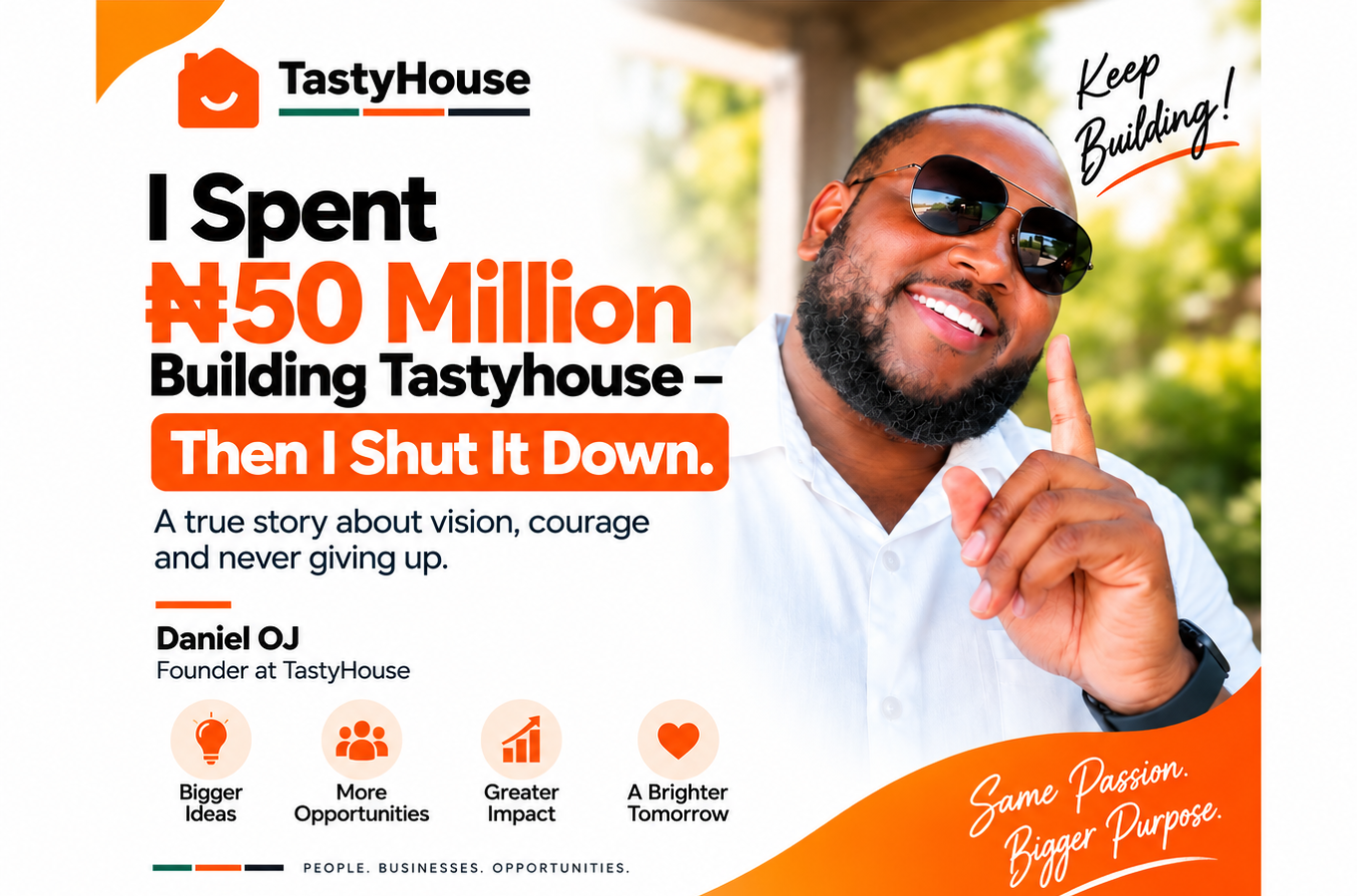

I Spent ₦50 Million Building Tastyhouse — Then I Shut It Down. A founder’s story about courage, failure, rebuilding, and refusing to give up.
By Daniel OJ, Founder at Tastyhouse
Every founder eventually reaches a moment when they have to make a difficult choice:
Do I keep protecting what I have built, or do I rebuild it into what people actually need? For me, that moment came with Tastyhouse. I had already invested approximately ₦50 million into a technology project. There were developers, designers, technology, countless hours of work, and a vision that I genuinely believed in.
From the outside, it looked like a serious investment and an impressive project. But something kept bothering me. I had to ask myself one uncomfortable question:
“Does this really solve the problems vendors and customers are facing?”
The honest answer was not well enough. And that realization changed everything.
The Hardest Decision
I made a decision that was extremely difficult as a founder.
I shut it down.
Imagine spending millions of naira building something, watching it come together, and then deciding that you need to start again. It is not easy. There is a natural temptation to think:
“I’ve already spent so much money. I can’t start over now.”
But I learned an important lesson: Money already spent should not force you to continue building the wrong solution. ₦50 million spent on the wrong solution is more expensive than starting again with the right one. So instead of protecting the investment, I focused on protecting the vision. Back to the Drawing Board. We went back to the beginning. This time, the question wasn’t: “What technology can we build?”
The question was:
“What do vendors and customers actually need?”
That changed our approach.
We listened.
We observed.
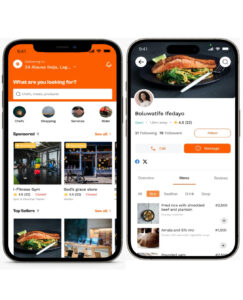
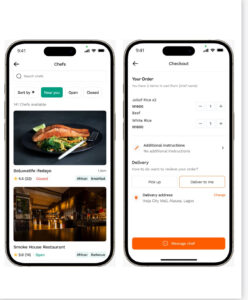
We questioned our assumptions. And we began rebuilding Tastyhouse around real problems. What did vendors need? They needed a simple way to put their businesses online. They needed to showcase their products and services. They needed customers to see their prices and locations. They needed a professional storefront without the stress and expense of building and maintaining a traditional website.
They needed a way to receive orders directly. And they needed to grow without unnecessary middlemen taking a percentage of every sale. What did customers need? Customers needed a simpler way to discover businesses. They needed to see what businesses offer. They needed clearer information. They needed to know prices and locations upfront. And they needed an easier way to connect with businesses and make purchasing decisions. That became the foundation for the next version of Tastyhouse.
We Rebuilt. Again. And Again.
The rebuild wasn’t simply about changing the technology. It was about changing our mindset.
New strategy.
New technology.
Better understanding.
Simpler solution.
We listened to vendors.
We listened to customers.
We tested.
We improved.
And we kept going.
Because building a startup is rarely a straight line. Sometimes you build something. You launch it. You learn. You discover what doesn’t work. Then you change it. And that’s okay.
Rebuilding Is Not Failure
One of the biggest lessons I’ve learned is that rebuilding doesn’t mean you failed. Sometimes rebuilding is actually a sign of leadership. Your first product doesn’t have to be perfect.
Your strategy may change.
Your market may change.
Your customers may teach you something you didn’t know when you started. And sometimes, the smartest thing you can do is admit:
“This isn’t working the way it should. Let’s fix it.”
Don’t become emotionally attached to a product simply because you’ve spent money on it. Become attached to the problem you’re trying to solve. That’s where the real value is.
To Every Startup Founder Struggling Right Now If you’re building a startup and things aren’t going according to plan, I want you to know something:
Your story isn’t over. You may need to change your strategy. You may need to change your product. You may need to go back to the drawing board. You may even need to start again. But starting again doesn’t mean starting from zero. You are starting again with experience. You now know what you didn’t know before. You have learned from your customers. You understand the market better. You understand your mistakes. And you have a clearer picture of where you need to go.
So pause.
Learn.
Adjust.
Rebuild.
Keep going.
Sometimes the breakthrough isn’t waiting at the end of the road you’re currently on. Sometimes you have to build a new road.
Why I Didn’t Give Up
I didn’t shut down the first Tastyhouse technology project because I stopped believing in Tastyhouse. I shut it down because I believed in the vision enough to build it better. That distinction matters.
Giving up would have been walking away from the problem. Rebuilding was choosing to solve it differently. And that’s what we’re doing.
We’re still building.
Tastyhouse is being built around a clearer understanding of what businesses and customers actually need. The journey isn’t finished.
And perhaps that’s the most exciting part. A final message to founders Don’t measure your startup journey only by how much money you’ve spent, how many times you’ve failed, or how long it has taken. Measure it by how much you’ve learned.
Measure it by how many problems you’re solving. Measure it by whether you’re getting closer to creating something people genuinely need. Your first version doesn’t have to be perfect.
Your business can evolve.
Your strategy can change.
Your product can change.
And you can start again.
Just don’t give up on the vision simply because the first version didn’t work. Sometimes, letting go is the first step to going further.
Keep building.
Keep learning.
Keep improving.
Your story isn’t over yet.
Daniel OJ
Founder, Tastyhouse
Same passion. Bigger purpose.
Keep Building.